


Most companies want great looking videos. But the organizations that consistently grow are the ones that create videos that do more than look good. They choose videos designed to convert. If you want to reach this level of performance, you need more than a creative idea. You need a strategic video plan that has a direct impact on revenue. This guide will give marketing leaders and growth teams a clear roadmap on how to build a video strategy that improves conversion rates and proves real ROI.
At Splashhh Media, everything begins with strategy first. Whether a business needs ecommerce video production, SaaS video production, real estate video production, B2B video production, or event video production, the outcome is always the same. The video must perform. It must drive leads. It must increase conversions. It must move prospects from interest to action.
This guide covers how video can support every stage of the customer journey, how to plan for outcomes, how to measure performance, and how to distribute video assets in ways that actually drive business impact. Marketing leaders can use this as a framework to build consistent, predictable results from every video they produce.
Why Most Video Content Fails To Convert
Many brands continue to invest heavily in video yet struggle to see measurable results. The reason comes down to one problem. They focus on the creative before the strategy. Without clear objectives and distribution planning, video assets become content without purpose. They sit unused or fail to reach the right audience.
There are a few common mistakes that weaken results:
1. No conversion goal
Every video needs a job. If the job is not defined, the video cannot perform.
2. No understanding of the target audience
If the audience is unclear, messaging becomes vague and ineffective.
3. Overly creative without structure
Cinematic visuals matter. But they only convert when guided by strategy.
4. No amplification plan
A video cannot drive conversions if it is not seen by the right people in the right channels.
5. No repurposing
One video has the potential to become dozens of optimized assets. When companies skip this step, they lose reach and impact.
To avoid these pitfalls, a proper video strategy must be built on clear goals, measurable outcomes, and a multi channel plan that supports the entire marketing funnel.
Step 1: Define the Job of the Video
A high performing video strategy begins with a clear understanding of what the video is supposed to accomplish. This is where marketing leaders often lean on The Splash Makers Framework, which starts with strategic planning. Before any camera gear is selected or any script is written, the team must answer one critical question. What job does the video need to do?
Here are common strategic objectives:
Increase website conversion rates
Videos placed above the fold on landing pages often increase conversions by clarifying value and building trust.
Shorten the sales cycle
SaaS video production or B2B video production often focuses on simplifying complex offerings.
Build credibility and authority
Brand films help companies stand apart from competitors, especially in industries like ecommerce, real estate, and corporate services.
Generate inbound leads
Educational content and social proof videos attract prospects who are actively researching solutions.
Strengthen paid advertising performance
Ad creatives optimized for performance speed up acquisition and support scale.
Each objective requires a different creative structure, message, and deployment strategy. The clearer the objective, the more effective the final video will be.
Step 2: Map Your Video Strategy to the Customer Journey
The best video strategies support every stage of the customer journey. When planned correctly, a single shoot can generate assets that attract, nurture, and convert prospects.
Top of Funnel (Awareness)
Ideal video types:
- Brand films
- Social media videos
- Short format ads
- Thought leadership clips
- Founders message videos
Goal: Build recognition, create engagement, and spark curiosity.
Middle of Funnel (Consideration)
Ideal video types:
- Product walkthroughs
- Feature deep dives
- Comparisons
- Expert insights
- Real estate video production or ecommerce video production that highlights benefits over features
Goal: Help prospects evaluate options and trust your solution.
Bottom of Funnel (Conversion)
Ideal video types:
- Customer success stories
- Testimonial videos
- Case studies
- Executive communications
- Demo videos
- Event video production assets that showcase real user experience
Goal: Remove objections and provide evidence that the customer is making the right decision.
Post Purchase (Retention and Advocacy)
Ideal video types:
- Onboarding content
- Customer training
- Community updates
- CEO communication videos
Goal: Improve retention, reduce churn, and turn customers into advocates.
Mapping your video strategy to the funnel ensures every asset has a purpose, increases conversion potential, and strengthens long term growth.
Step 3: Build Your Messaging Framework
The next step is developing messaging that speaks to your audience’s pain points and goals. High conversion videos follow a clear structure that leads viewers toward action.
Your messaging should answer:
- Who is the audience
- What problem they are experiencing
- Why your company has the best solution
- What evidence proves that solution works
- What action they should take next
In ecommerce video production, the message often focuses on product value and lifestyle outcomes. In SaaS video production, clarity is critical because customers need to understand features and benefits quickly. In B2B video production, messaging revolves around business impact, ROI, and long term results. Real estate video production often showcases location, scale, and opportunity.
No matter the industry, messaging must be aligned with the strategic objective. This prevents videos from becoming creative for the sake of creativity.
Step 4: Plan the Creative Based on Strategy
Once objectives and messaging are clear, creative development becomes simple. Every decision in the production process should support the defined outcome. This includes scripting, set design, shot selection, music, and pacing.
Here are a few creative principles that improve conversion rates:
Clarity beats complexity
Viewers must understand your message quickly.
Emotion drives action
Brand films and storytelling increase memory retention and trust.
Authenticity wins
Real customers, real employees, and real stories outperform stock footage.
Shorter is often more effective
Especially in paid advertising, social content, and ecommerce video production.
Cinematic visuals increase perceived value
High quality production builds credibility, especially for B2B and real estate.
When all creative decisions support strategy, videos not only look great but function as assets that help companies grow.
Step 5: Execute With Cinematic Quality
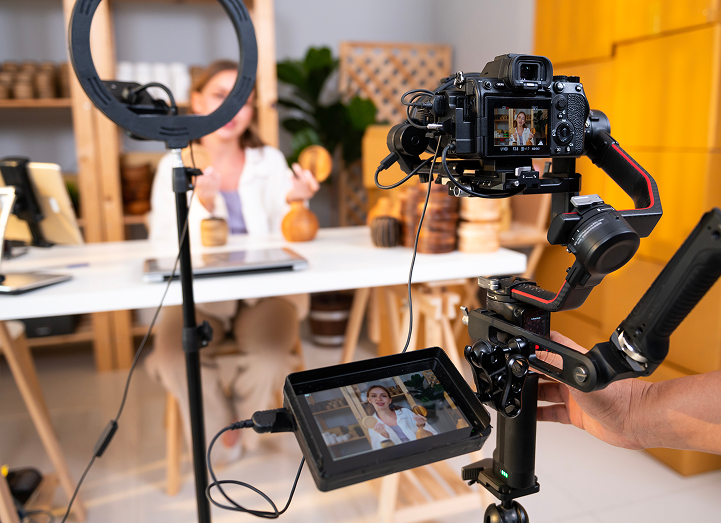
Once strategy and creative planning are complete, production begins. Execution quality matters because it influences brand perception, credibility, and engagement.
High production value helps:
- Strengthen trust with buyers
- Position companies as premium
- Make messaging more memorable
- Improve performance in paid channels
- Increase watch time and retention
This is why businesses in competitive markets like video production in San Francisco need cinematic execution that stands apart from generic content. Professional lighting, color, audio, stabilization, and direction all contribute to conversion rates. They elevate the story and help audiences connect emotionally.
Step 6: Create a Repurposing Plan
One of the biggest opportunities for improving ROI is repurposing. A single shoot can produce dozens of assets if planned strategically. This is an essential part of the Splash Makers Framework.
Here are examples of repurposed content:
- Long form brand film cut into short clips
- A product launch video turned into ad variants
- A customer story turned into several testimonial snippets
- A founder video adapted for LinkedIn thought leadership
- Event video production split into highlight reels, speaker cuts, and social media assets
- Longer educational videos segmented into micro content
A repurposing plan ensures your team has a steady stream of high performing content without repeated production costs. It also increases total impressions, engagement, and conversion potential.
Step 7: Build an Amplification Plan
Even the best video cannot perform if no one sees it. Distribution is where conversions happen. Without a clear amplification plan, videos become underutilized assets. A strong plan includes:
- Launch strategy
- Platform selection
- Audience targeting
- Posting schedule
- Paid media integration
- Email distribution
- Website placement
- Sales enablement delivery
Each platform requires a different approach. A B2B video production launch strategy on LinkedIn will look different from ecommerce video production on Instagram or event video production for recap campaigns. What matters most is that distribution supports the original business objective.
With amplification, you are not just delivering content. You are delivering outcomes.
Step 8: Measure and Optimize for
Conversion
To prove video ROI and improve future performance, results must be measured. Marketing teams should track:
- Conversion rate
- Watch time
- Engagement
- Cost per acquisition
- Lead quality
- Retention impact
- Traffic sources
- Attribution paths
- Sales cycle length
Measurement allows teams to refine their creative, improve their messaging, and make smarter decisions about future investments. When teams combine strategic planning, cinematic execution, repurposing, and amplification with measurement, video becomes one of the most powerful conversion assets in the marketing toolkit.
Conclusion: Build Videos That Work, Not Just Videos That Look Good
A high performing video strategy is built on intentional planning, business alignment, and full funnel execution. When marketing leaders understand how to build a video strategy that improves conversion rates, they transform video from a cost into a growth engine.
Whether your team needs ecommerce video production, SaaS video production, B2B video production, real estate video production, event video production, or full strategic planning, the right framework will help turn creative assets into measurable business outcomes.
If you are ready to build videos that support real growth and drive conversions across your entire funnel, Contact us and start building assets that work for your business.
Frequently Asked Questions
Q1. How does video improve conversion rates?
Video increases clarity, builds trust, and delivers information in a format that is easier for customers to understand. It also creates emotional connections that help move prospects toward action.
Q2. What types of videos work best for B2B companies?
B2B video production often relies on customer stories, product walkthroughs, executive messaging, and brand authority videos that support long decision making cycles.
Q3. How can video support ecommerce growth?
Ecommerce video production helps showcase products more effectively, highlight benefits, and demonstrate use cases. This increases customer confidence and leads to higher conversion rates.
Q4. What is the role of strategy in video production?
Strategy defines the job of the video. It determines messaging, creative direction, distribution, and measurement. Without strategy, video becomes content without purpose.
Q5. How do you measure video ROI?
Video ROI can be measured through conversion rates, cost per acquisition, lead quality, watch time, engagement, and attribution paths.